
Workplace data is often reduced to one simple question: is the office busy or empty? Useful, certainly. But it is not enough to make confident decisions about desks, meeting rooms, floors or entire office portfolios.
To optimise workplace space effectively, organisations need to understand the difference between occupancy, space utilisation and space efficiency. Together, these measures provide a fuller view of how spaces are used, where improvement is possible and how real estate can deliver greater value.
What is occupancy?
Occupancy shows whether a space is in use at a particular moment. It is the real-time view: is a desk occupied, is a meeting room being used, or is a floor currently active?
Workplace occupancy data is valuable for everyday operations. It can help employees find available space, support a smoother booking experience and give workplace teams an immediate view of office activity. However, a single snapshot does not tell the whole story. A room that is occupied at 10:00 may still sit unused for most of the week.
What is space utilisation?
Space utilisation measures how often and how long a space is used over time. Rather than focusing on one moment, it identifies patterns across days, weeks or months.
This makes utilisation analytics particularly useful for workplace planning. A meeting room may appear busy during a few peak hours, for example, but have low overall utilisation across the working week. Equally, an area that looks quiet at first glance may be consistently used by specific teams at particular times.
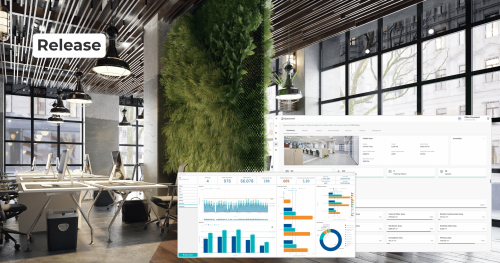
By analysing real utilisation data, workplace and corporate real estate teams can move beyond assumptions and identify underused desks, oversized meeting rooms or locations where demand regularly exceeds capacity. Spacewell Workplace brings occupancy and utilisation data into portfolio and building-level dashboards to support these decisions.
What is space efficiency?
Space efficiency asks a broader business question: are we getting sufficient value from this space, considering its capacity, cost and intended purpose?
A 12-person meeting room used by two people for an hour each morning may technically be occupied, but it may not be an efficient use of valuable office space. The same applies to a large desk area that remains largely unused, even if a handful of employees occupy it each day.
Space efficiency connects workplace usage data with the practical realities of real estate. It helps organisations assess whether they have the right type, amount and mix of space to support employees, hybrid work policies and business goals.
Why the distinction matters
Occupancy, space utilisation and space efficiency are related, but they answer different questions:
| Measure | Key question | Example insight |
| Occupancy | Is the space in use right now? | A meeting room is currently occupied |
| Space utilisation | How often and how long is it used? | The room is used for only 15% of available hours |
| Space efficiency | Is the space delivering sufficient value? | A smaller room could meet the same demand more efficiently |
Looking at all three measures gives organisations a more accurate basis for workplace optimisation. It also prevents decisions based on isolated observations, such as assuming a crowded Tuesday means the office needs more space. The data may instead reveal that the real opportunity is to improve the mix of spaces, encourage better booking behaviour or adapt policies around peak days.
Ready to stop guessing?
Your workplace data should do more than tell you whether a room is occupied. It should show you where space is being wasted, where demand is growing and how your performance compares with organisations like yours.
Download Office Myths vs. Real Use: Workplace Benchmark Report 2026, Spacewell’s definitive guide to workplace occupancy, space utilisation and efficiency. Built on anonymised, real-world data from 80,000 sensors across 20 countries, it gives you the evidence to challenge assumptions, benchmark against peers and make smarter real estate decisions with confidence.
Get the Workplace Benchmark Report today and turn real workplace data into your next competitive advantage.
Turn workplace data into action
Spacewell Workplace helps organisations understand how office space is actually used through occupancy and utilisation analytics, sensor and presence data, and portfolio-level dashboards. Those insights can support better decisions around space consolidation, workplace policies and employee experience.
The goal is not simply to make every desk permanently occupied. It is to create a workplace that provides the right spaces at the right time, while helping organisations reduce unnecessary real estate and operational costs. After all, an office should work hard, but it does not need to pull a double shift.