Client
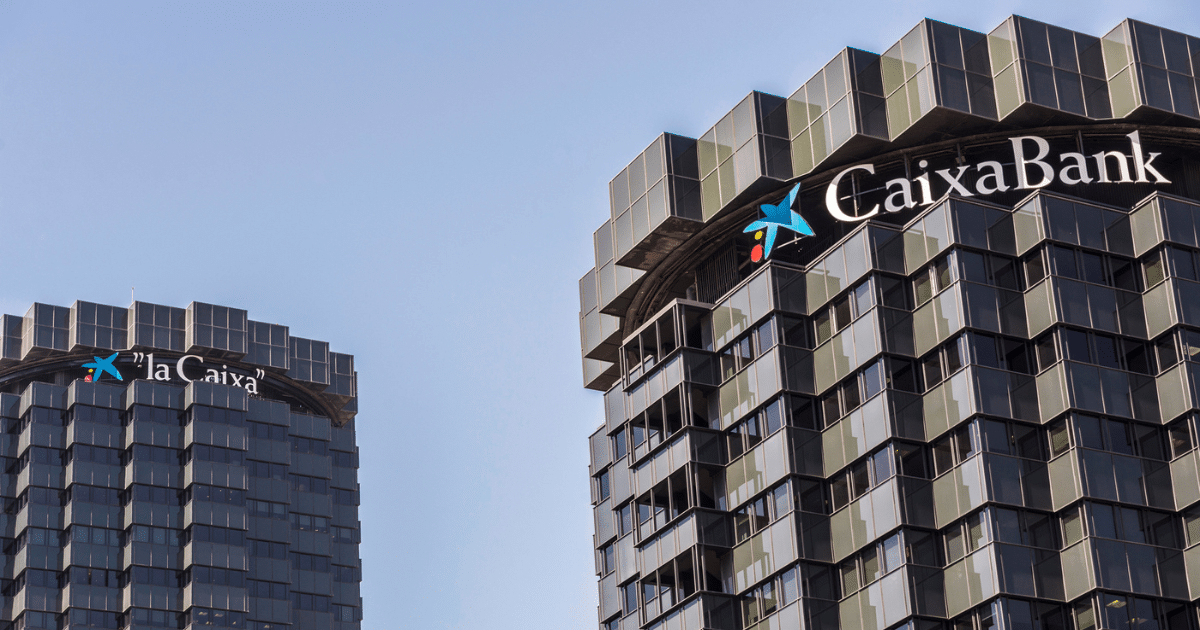
CaixaBank
Scope
Implementation of the Energy Management System across 4,000 sites and the implementation of an energy culture across the workforce.
CaixaBankis one of Europe’s leading financial institutions, with a workforce exceeding 30,000 and 4,000 sites across Spain. Managing such a large estate is a challenge for the Facility Management team, made successful by a dedicated professional team. The CaixaBank FM team has set a series of objectives: to guarantee the comfort of their employees and customers, improve energy performance and reduce maintenance operations.
The Energy Challenge: Big Impact, Minimal Disruption
CaixaBank FM needed to address the following strategic priorities:
- Enhance comfort and well-being for thousands of employees and visitors
- Cut energy usage across more than 4,000 installations
- Integrate different communication protocols, IoT platforms and equipment
- Move toward “zero complaints” by proactively reducing maintenance issues
Achieving these goals required a scalable and intelligent solution—one that didn’t rely on disruptive hardware rollouts or lengthy installation times.
The Solution: Smart Energy Management at Scale
From an energy perspective, the key goals included the detection of potential savings and optimization of power, energy analytics and incident identification services and energy awareness.
Spacewell Energy supported CaixaBank FM across these areas as follows:
1. Identification of Energy Savings Potential
CaixaBank compared thousands of buildings without installing sensors thanks to Spacewell Energy’s AI-powered benchmarking and obtained the following recommendations:
- Detection of the buildings with the greatest savings potential
- Power optimization across sites
- Improved air conditioning controls
- Solar PV feasibility
Over 2,000 power contracts were automatically optimized through the platform.
2. Using Energy Data for Smart Decision-Making
CaixaBank gained real-time visibility into consumption trends with the help of the EMS. The system connected seamlessly with their building management system (Niagara) and enabled:
- Live tracking of lighting and HVAC
- Validation and measurement of Energy Conservation Measures (ECMs)
- Portfolio-wide reporting, with drilldowns by site, system, or time range
More than 170 energy conservation measures were identified and acted on, each tracked to verify results and ROI.
3. Raising Energy Awareness with Clear Reporting
Energy awareness became one of the strongest elements of the project. While energy management has a technical aspect, the organisational and people component are essential to obtain results. A large effort was made to engage all users to be conscious about energy consumption and be part of the solution.
Nowadays, over 25,000 people across CaixaBank receive regular reports about energy consumption and savings, raising awareness and commitment. This has evolved from standard reporting into interactive and adaptative dashboards in real-time.
Following from this real example, we’ll dig into the concept of energy awareness and energy culture.
What do Energy Awareness and Energy Culture Mean?
Energy culture refers to patterns of behavior, knowledge and awareness of energy use. This also includes savings, and the impact that energy expenditure has on total costs and the environment.
The Importance of the Human Factor in Energy Management
Bank buildings and branches, as in other sectors, require a lot of energy, but it is ultimately people who consume it. Employees, customers, cleaning staff, maintenance staff, etc. And their awareness and energy culture are key to achieving results.
Even if you install certain automation or components with an Energy Management System (EMS) in your bank, it is not only about technology and software. Energy consumption is strongly influenced by personal preferences. For instance, there are those who want to work with all the lights on, or those who are hot or cold right away, or those who prefer to keep the windows open even at the risk of getting cold or hot to have natural ventilation. You can surely think of real cases of colleagues or employees. For example, during the covid-19 pandemic, supporters of constant ventilation even at the risk of getting cold were common.
Thus, we see that energy consumption is based on the needs of the users as well as those of the company. For professional service reasons, in banks, energy consumption for lighting, computers and ATMs is needed for the proper functioning of the service, whilst air-conditioning and heating are needed to keep staff comfortable in the space. Not forgetting various elements such as coffee or vending machines, and hand dryers in the toilets, among others.
Users interact with energy and control it partially. Therefore, it is vital to acknowledge that workers will always seek maximum comfort to carry out their work in the most favourable conditions, whether it implies regulating temperature, lighting or ventilation.
In addition, by managing electronic equipment, each employee contributes to energy consumption and can implement energy-saving gestures, for example, by switching off computers at the end of the day instead of leaving them on standby all night. Employees are a central element in achieving efficient energy use, as the final management of consuming equipment falls under their responsibility.
How to Implement the Energy Awareness Strategy in your Bank
1. Collaboration between Spacewell Energy and the Facilities Management Team
To identify energy efficiency measures and define targets in your bank, you wil most likely involve Facility Management, whether internal or external. In the case of CaixaBank, Spacewell Energy worked together with the Facility Management team to develop the project, helping with the detection of potential savings and with the energy awareness strategy, among others.
After consulting with both FM and energy professionals, and starting to plan your energy efficiency strategy, it is time to involve your employees. Alternatively, this could be done earlier, but getting the support of professionals will help your message get across.
2. Internal Communication to Promote Transparency and Engage Employees
Some information and participation activities include the distribution or the display of regular reports via the intranet or internal emailing, which can include everything from current consumption to reduction targets, as well as indications and tips for savings. This action should be done on a regular basis and can be as frequent as you want, especially if there is a high turnover of employees.
You want to combine transparency of information with employee collaboration to help you reach your energy saving goals. Before communicating your energy management plans, there are certain aspect that need to be considered to be as realistic as possible and not to demand too much to your employees:
- Employees don’t usually have a technical background, thus must be given a correct and easy way to understand how to manage the facilities.
- Employees cannot be asked to reduce consumption if their equipment (climate or lighting) is not working properly and requires replacement or maintenance.
- Feedback should not be negative, even if the results do not go as expected the message should always be focused on achieving the objectives and motivating.
- Transparency is key: employees should be offered tools and information about what is happening
- The monitoring should not only reflect the evolution of the consumption (better or worse) but should also include advice for improvement, congratulations and comparisons with other offices or the global vision of the office area or the entire portfolio so that they do not feel alone on the road to savings.
- In the case of offices, not only employees should be involved in energy management: cleaning staff or catering must also be taken into account and need to be clear about how they should operate when they come to work.
3. Gamification in Energy Management
Once the first communication phase is done and the protocols, regularity and type of information to be shared have been established, you can take it a step further. Gamification strategies such as quizzes or challenges can be a viable option to engage your employees directly by setting goals.
Gamification, such as benchmarking between different offices, can be very useful as a motivator, either because of rivalry or, on the contrary, because of emotional ties with colleagues. Energy efficiency champions or teams play an important role in the monitoring and motivation of each office. The fact that each of these staff members receives a periodic report or has a scorecard to see which offices are improving and which are not, can become a recurring issue in the periodic meetings they might have.
However, the idea is not a competitive game where those who do less are pointed at, but rather a way of highlighting individuals or offices that are committed, encouraging a healthy comparison with clear results. This phase is optional, depending on your needs, but it can be one more gesture in the process towards energy savings.