
The Building Energy Act in Germany (GEG) places new requirements on owners, operators, and property managers: central energy‑related building data from non‑residential properties must be captured and provided digitally as of January 1, 2025. This obligation is not only anchored in law. The digital capture of energy‑related building data enables continuous monitoring of energy consumption, targeted optimization of technical systems, and transparent, audit‑proof documentation. Anyone who engages with this topic now not only gains legal security, but also tangible economic benefits.
GEG‑compliant digital capture of energy‑related building data: What does the law require?
The GEG, in particular § 71a, obliges owners and operators of large buildings to capture energy‑related data completely, regularly, and digitally. This includes, among other things, information on heating and cooling systems as well as on the energy consumed. The aim is to detect inefficiencies at an early stage through detailed monitoring, implement measures to reduce consumption, and thereby systematically increase energy efficiency. In doing so, the systems must be designed as open platforms, function interoperably with other technologies, and ensure reliable, long‑term data storage.
Economic benefits of digital capture of energy consumption data
Beyond merely fulfilling legal requirements, the digital capture of energy‑related building data offers a wide range of concrete benefits.
- First, it increases energy efficiency by providing full transparency of consumption patterns and enabling automated optimization of building technology.
- Second, it reduces costs, since energy losses can be avoided and actual demand can be significantly lowered.
- Third, it improves the planning and eligibility of renovation projects for funding. Because only those who provide reliable data gain access to government funding programs such as the Federal Funding for Efficient Buildings (BEG).
- Fourth, it enhances the property’s attractiveness with regard to ESG criteria, long‑term asset value, and marketability during sale or refinancing.
Technical implementation: How to capture energy data in your buildings
GEG clearly defines how the digital capture of energy‑related building data must be implemented. All energy carriers used (electricity, gas, district heating, and, where applicable, cooling) must be measured and documented automatically. Modern metering systems and submetering solutions are used for this purpose. In addition, continuous monitoring is required, which must provide benchmarkable results: buildings must be made comparable so that efficiency potentials can be identified objectively.
To successfully meet the requirements, some technologies are required:
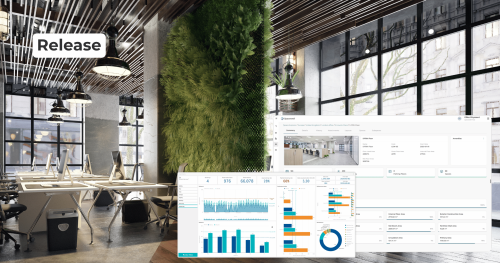
- Intelligent metering systems that capture data in real time, as well as a data‑analysis platform that visually presents consumption, CO₂ emissions, and deviations
- An energy management system to integrates the data, analyse it with the support of AI, and provides actionable recommendations for optimization. In this way, the digital capture of energy‑related building data becomes the technical foundation for all subsequent planning and optimization measures.
Measurement systems can also be retrofitted into older existing buildings, coupling modern consumption meters to existing installations with minimal effort and without major intervention in the energy infrastructure.
A practical example from the industry shows that, when GEG compliance suddenly becomes a prerequisite for a sale, the centralized digitalization of meter data is required. Retrofitting then becomes a decisive factor. With a quick retrofit of metering systems and the appropriate platform, energy‑related data can be provided in a legally compliant and traceable manner. An approach that can be easily scaled to additional properties and significantly reduces lengthy, manual processes.
How an energy management system enables compliant digital capture of energy‑related building data
With a modern energy management system like Spacewell Energy, the challenges of the GEG for property owners and managers are addressed. The system is retrofittable and can be combined with different smart meters; it can also be integrated into existing buildings and quickly establishes a solid, reliable data foundation.
The combination of automated data capture and intelligent analysis makes the solution an important building block on the path to a climate‑neutral building future. Users benefit from an integrated system that ensures GEG compliance, saves energy, and creates transparency. All without complex manual processes.
The benefits of an EMS for GEG Compliance
- Plug & Play: Fast, IT‑independent installation without local interventions
- Scalability: Flexible expansion across the entire portfolio possible
- Analytical capability: Always up‑to‑date and clear consumption analysis
- Automation: Higher data quality and no manual data entry
- Legal and future‑proof: Compliance with current as well as upcoming regulatory requirements
- Cost transparency: Clear structures and traceable investments
Act now and successfully implement digital energy‑data capture for buildings
Digital capture of energy‑related building data is not only a legal obligation, but also a major opportunity. It enables companies, municipalities, and property managers to understand, control, and reduce their energy consumption. At the same time, it creates the prerequisite for sustainable investments, improved let‑ability, and long‑term value retention of the property. Anyone who invests in digital infrastructure today does not only comply with the GEG, they also actively shape the transformation of the building sector.