Energy Efficiency Measures in Retail: A Case Study in the Food Industry

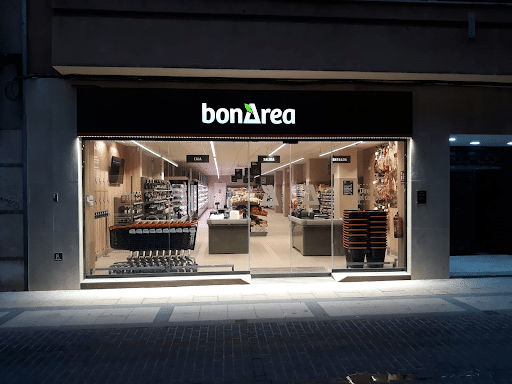
BonArea Food Stores Energy Savings

Importance of Energy Efficiency in Retail

Energy efficiency is paramount in the retail sector, especially in Europe where the industry is a major energy consumer. Retail operations account for approximately 25% of global emissions, with a significant portion stemming from the retail value chain. In the UK alone, the retail industry spends over £3.3 billion annually on energy and is responsible for around 215 MtCO2e of emissions, highlighting its substantial environmental impact.

Retail stores are energy-intensive, with substantial consumption driven by lighting, heating, ventilation, and air conditioning (HVAC) systems.  Effective energy management enables you, as a retailer, to pinpoint areas of energy waste and inefficiency, implementing solutions that reduce your consumption and costs.

This not only results in financial savings but also enhances your brand image by showcasing a commitment to sustainability. Retailers that prioritize energy efficiency are better positioned for long-term success, benefiting from improved customer comfort and employee productivity.

Read more

Subscribe to our newsletter

All our news directly to you.

Customer Service

We're here to help. Find the answers you need.

The Return on Investment of an Energy Management System

The building stock is a major consumer of energy and accounts for 40% of total energy consumption in Europe. Approximately half of this consumption occurs during the design and construction phase and has to be controlled by builders, engineers, architects and other actors.

The other half occurs during the lifetime of buildings (IDAE), as they require lighting, heating, running water… Once the building is up and running, energy consumption is constant during its lifetime. Part of this consumption is necessary for a building to function normally and for users to be comfortable in a safe space.

The problem is that it can sometimes be difficult to make the distinction between necessary and superfluous energy consumption, which leads to overconsumption.

The first step to identify necessary consumption and start reducing your energy consumption is to gather data which can come from your invoices, your meters, your monitoring systems, etc. The more detailed the data is, the easier it is to interpret them and thus the better the results (and therefore, the treatment chosen for your building). Indeed, if the data is incorrect, your conclusions will be biased. This is where implementing an Energy Management System (EMS) will be of great help to your company.

Keep on reading if you are not sure to have a good understanding of how an EMS works if it would be a useful investment for your company, or if you just want to convince someone to get you started.

Read more

Subscribe to our newsletter

All our news directly to you.

Customer Service

We're here to help. Find the answers you need.

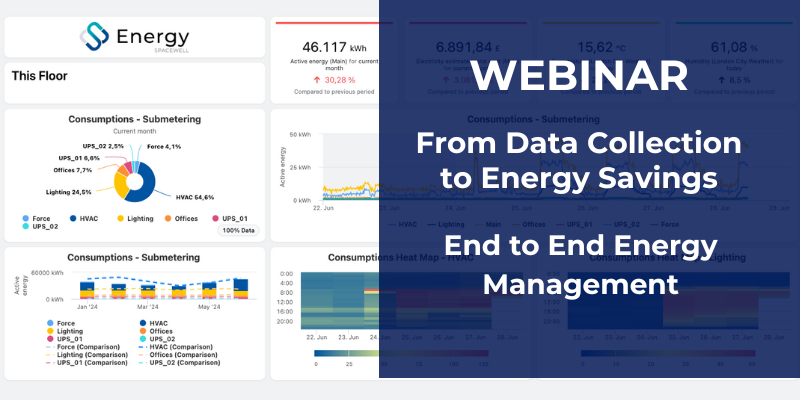
From Data Collection to Energy Savings: End to End Energy Management [Webinar]

As Energy Management becomes more important for businesses of any kind, understanding the various technologies that drive energy management is an important step to get started. These technologies not only help in optimising energy use but also play a significant role in reducing costs and enhancing sustainability.

We have recorded a webinar to demonstrate how monitoring energy can be easy and can deliver results in an easy and smooth manner.

Read more

Subscribe to our newsletter

All our news directly to you.

Customer Service

We're here to help. Find the answers you need.

Energy Management and ESG Reporting

The growing importance of ESG (Environmental, Social, and Governance) reporting has made energy management a critical focus for companies worldwide. As businesses strive to meet environmental regulations and societal expectations, the need for transparent and robust ESG metrics is growing.

Energy management plays a pivotal role within ESG reporting, particularly in the environmental domain. Energy management systems can significantly reduce energy consumption and costs, aligning with sustainability goals and enhancing a company’s environmental footprint. However, integrating energy management with ESG reporting poses challenges, including data complexity, corporate structure, and technological integration.

Despite these challenges, the benefits of combining energy management and ESG reporting are substantial. Companies can track and reduce energy consumption, improve their environmental impact, and mitigate risks. Industry trends show a growing reliance on digital tools and experienced partners to support these initiatives, underscoring the need for comprehensive energy management strategies in achieving ESG objectives.

Read more

Subscribe to our newsletter

All our news directly to you.

Customer Service

We're here to help. Find the answers you need.

10 Key Considerations When Selecting Energy Monitoring Hardware

Recent findings from the yearly State of Energy Management survey indicate that 19% of respondents struggle with identifying the right technologies for their energy management needs. To address some of those struggles, we have invited IoT infrastructure firm EpiSensor to provide some insights based on their 15 years of experience researching, designing, and manufacturing IoT solutions for energy management.

In this article, we aim to demystify the technology selection process by outlining the 10 key considerations when choosing energy monitoring hardware. 

Read more

Subscribe to our newsletter

All our news directly to you.

Customer Service

We're here to help. Find the answers you need.

How an Energy Management System can Help you Address ESG Challenges [Webinar]

Energy Management is not new for Real Estate but it has gained importance over the last few years. The growing importance of sustainability and energy efficiency have made them areas you cannot avoid. 

To discuss the growing importance of Energy Management and efficiency in Real Estate and how you can tackle them, we have a webinar recording for you.

Read more

Subscribe to our newsletter

All our news directly to you.

Customer Service

We're here to help. Find the answers you need.

Proptech for Energy Management: Working Towards Sustainable Buildings

Proptech, the integration of property and technology, is a huge trend in property management. It refers to technology used by real estate professionals or property managers to manage their facilities on a day to day basis and gain operational efficiency.

That definition is as broad as it’s realistic. That’s because managing a building entails a large number of actions, and so do the technologies developed to help with those tasks. We could say one of the main reasons why proptech solutions have grown rapidly is because they help tackle key problems by saving time, avoiding repetitive tasks and automating processes.

In this article we’ll take a look at proptech solutions, what they mean for energy management and the role of AI.

Read more

Subscribe to our newsletter

All our news directly to you.

Customer Service

We're here to help. Find the answers you need.

Saving Energy in Public Buildings: A Case Study

After briefly reviewing the new European Energy Performance of Buildings Directive last week, today we’re focusing particularly on energy consumption in public buildings.

Publicly managed or owned buildings represent a significant part of the overall building stock and they are all around us. In reality, it doesn’t really matter if a building is public or private, it contributes on similar terms to energy consumption, carbon emissions and contributes to energy demand to the grid. But let’s see more.

Read more

Subscribe to our newsletter

All our news directly to you.

Customer Service

We're here to help. Find the answers you need.

Energy Performance of Buildings Directive 2024/1275: What’s to Know?

The revised Energy Performance of Buildings Directive (EU/2024/1275) represents a significant step forward in the EU’s commitment to enhancing energy efficiency and reducing greenhouse gas emissions from buildings, which are among the largest energy consumers in Europe. This directive is designed to achieve a substantial reduction in energy usage (around 11%) and to support the EU’s decarbonisation goals.

Under this directive, member states are encouraged to increase the renovation rates of existing buildings, especially those with subpar energy performance, through adaptable measures suited to their unique contexts. This flexibility is crucial in addressing the diverse characteristics of European buildings, from climate variations to historical architecture. The directive also emphasizes the importance of energy audits and energy management systems to ensure buildings not only comply with new standards but also contribute to energy savings over the long term.

This directive is published only a few months after the European Energy Efficiency Directive 2023/1791, as part of a determined effort to set the rules and obligations to reduce energy consumption across Europe.

Read more

The revised Energy Performance of Buildings Directive (EU/2024/1275) represents a significant step forward in the EU’s commitment to enhancing energy efficiency and reducing greenhouse gas emissions from buildings, which are among the largest energy consumers in Europe. This directive is designed to achieve a substantial reduction in energy usage (around 11%) and to support the EU’s decarbonisation goals.

Under this directive, member states are encouraged to increase the renovation rates of existing buildings, especially those with subpar energy performance, through adaptable measures suited to their unique contexts. This flexibility is crucial in addressing the diverse characteristics of European buildings, from climate variations to historical architecture. The directive also emphasizes the importance of energy audits and energy management systems to ensure buildings not only comply with new standards but also contribute to energy savings over the long term.

This directive is published only a few months after the European Energy Efficiency Directive 2023/1791, as part of a determined effort to set the rules and obligations to reduce energy consumption across Europe.

Read more
Subscribe to our newsletter

All our news directly to you.

Customer Service

We're here to help. Find the answers you need.

Energy Management in Hospitals: An Overview

Are your hospital energy bills too high? Improving energy efficiency in hospitals goes beyond simple cost savings and touches directly on better patient outcomes and environmental stewardship. When you focus on energy management you’re not only reducing your operational expenses but also significantly decreasing your carbon footprint. This commitment reflects positively on you as a healthcare provider, showing a dedication to both patient care and environmental responsibility.

Besides, energy-efficient hospitals offer a healthier indoor environment for both patients and staff. By implementing measures that enhance energy efficiency, such as improved ventilation systems or energy-saving lighting, you can ensure cleaner air and a more comfortable setting. This directly contributes to patient wellbeing and staff comfort, improving overall health outcomes. The move towards energy efficiency in healthcare settings is a clear win-win, aligning cost saving with enhanced patient care and environmental benefits. Let’s see more in this article.

Read more

Subscribe to our newsletter

All our news directly to you.

Customer Service

We're here to help. Find the answers you need.

Energy Management and Real-Time Data for Utilities [Case Study]

Utilities across the globe supply thousands of users with electricity, gas and water for their daily activities. At work, while traveling or at home, all of us benefit from the existing infrastructure that brings the supplies directly to us.

Thanks to years of innovation, development and deployment of networks, the access to quick and reliable energy supplies is a general expectation by most part of the population. If you work in the industry, you definitely know. However, there is a constant challenge for you: the work done behind the scenes to ensure a seamless supply of energy is massive. To ensure the optimum function and effectiveness, introduce new technologies and keep up with regulation and trends.

In this article we briefly discuss energy management for utilities, your challenges and some opportunities to get closer to your clients. And we bring you the real example of the german utility Gelsenwasser, who saves energy thanks to our Platform.

Read more

Subscribe to our newsletter

All our news directly to you.

Customer Service

We're here to help. Find the answers you need.

Partner Spotlight: Cunovesa

Cunovesa is an engineering and construction services company with a focus on energy management and efficiency. They offer services to clients in various industries, including the agri-food, industrial and chemical sectors. These are all sectors with a very important technical component, requiring very specific expertise and services.

In this Spotlight interview we talk to Cunovesa to find out more about their projects, their plans for the future and their relationship with energy efficiency.

Read more

Subscribe to our newsletter

All our news directly to you.

Customer Service

We're here to help. Find the answers you need.