

Auditing Buildings for Thermal Comfort

There are 6 variables that drive an occupant’s thermal comfort:

  • air temperature
  • surface temperature
  • humidity
  • clothing insulation
  • activity level (metabolic heat)
  • air velocity

The problem? These factors simply don’t tell the full story behind the maintenance involved in optimising temperature in office buildings, commercial buildings, primary schools or university campuses.

Thermal comfort depends on other factors as well, like climate and occupant preferences – for example, occupants in Denmark may be more susceptible to humidity and heat levels than occupants in Portugal.

The biggest challenges for Commissioning Agents and Facility Managers lie in finding a temperature that is satisfactory for the majority of their occupants, all who may have slightly different preferences, and doing so without sending the energy bill through the roof.

Here to tell us the full story behind getting thermal comfort right in buildings is Brenna Buckwalter from Copper Tree Analytics (before BuildPulse).

Read more

Subscribe to our newsletter

All our news directly to you.

Customer Service

We're here to help. Find the answers you need.

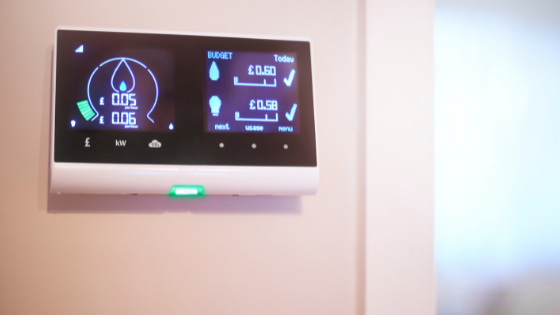
Understanding P272: Your Smart Meter Questions Answered

As of 1st April 2017, the energy regulation P272 has come into force in the United Kingdom.

Officially titled the Ofgem Balancing Settlement Code, this regulation has fundamentally changed the way more than 150,000 businesses in the UK are billed for their electricity use. All told, P272 represents a major step in the nationwide smart meter rollout that is set to continue through to 2020.

Read on to find out if and how your business or customers are affected, what it means for your energy bill, and what you need to know to come out ahead.

Read more

Subscribe to our newsletter

All our news directly to you.

Customer Service

We're here to help. Find the answers you need.

Where Do ESCOs Fit in the Demand Response Value Chain?

Demand response programs are opening up new opportunities for ESCOs to play a significant role in the operation and optimisation of energy grids.

After all, ESCOs have a unique competitive advantage: they can combine their energy management expertise with granular customer insights to help reduce or shift their clients’ energy usage during peak periods in response to time-based tariffs or other incentives.

Demand response also offers a great way for ESCOs to extend energy services beyond efficiency by contributing to grid stability, safety and environmental sustainability while earning additional savings and opening up new revenue streams for their customers.

But does this mean ESCOs will enter into competition with the new market players known as demand response aggregators?

Read more

Subscribe to our newsletter

All our news directly to you.

Customer Service

We're here to help. Find the answers you need.

How to Find Demand Response Flexibility in Any Business [INFOGRAPHIC]

A common myth among energy managers, operations engineers and process managers is that their operations are too small, specific or unique to be able to participate in demand-side response (DSR) programs.

Good news: as demand-side management technologies advance and stakeholders push to open up this new market, more players (including smaller ones) are able to participate. That means you don’t have to be a major power producer or heavy industrial user to participate in demand response anymore.

In this post we’ll focus on places you can look for demand response flexibility no matter what industry you’re working in. Read on to discover where you might unlock your company’s assets and open up new revenue streams for your business…

Read more

Subscribe to our newsletter

All our news directly to you.

Customer Service

We're here to help. Find the answers you need.

5 Things to Know About New Minimum Energy Efficiency Standards (MEES) in the UK

Landlords and energy managers for commercial buildings in the UK, pay attention: Minimum Energy Efficiency Standards (MEES) are about to come into force with major consequences for your business. As of April 1st 2016, all residential tenants already have the right to request energy efficiency improvements to their properties. And starting in April 2018, only properties with an energy performance rating of “E” or above will be legally rentable – that goes for commercial buildings too! 

Pretty significant changes, right? Yet surprisingly, two thirds of UK landlords are totally unaware of these new energy efficiency rules, even though they carry non-compliance penalties of up to £150,000. To learn more about how these changes will affect the UK commercial property rental sector, read on!

Read more

Subscribe to our newsletter

All our news directly to you.

Customer Service

We're here to help. Find the answers you need.

Extending Beyond Energy Efficiency: Demand Response [GUIDE]

Although many energy professionals are using these terms interchangeably, Demand Response (DR) and Demand-Side Management (DSM) are not the same thing.

However, they can definitely complement one another to help ESCOs deliver more successful, complete and effective energy management services. Advanced flexibility solutions like demand response also offer benefits beyond cost savings that typically come from energy efficiency alone.

Our latest free-to-download guide was created for energy professionals that are looking to incorporate advanced demand-side management applications and demand response into their service offering.

Read more

Subscribe to our newsletter

All our news directly to you.

Customer Service

We're here to help. Find the answers you need.

DEXMA joins the Building Efficiency Accelerator

DEXMA is delighted to announce its partnership with the Building Efficiency Accelerator, a public-private collaboration managed by the World Resources Institute as part of the Sustainable Energy for All (SEforALL) initiative of the United Nations.

The aim of the BEA is to double the rate of energy efficiency improvement in the global building sector by 2030.

Read more

Subscribe to our newsletter

All our news directly to you.

Customer Service

We're here to help. Find the answers you need.

FlexDSM: Building Demand Response Capacity in SMEs

Since October 2016, DEXMA’s Research, Development and Innovation Department has been involved in a new R&D+i project called FlexDSM (Flexibility Demand-Side Management), soon to be integrated into DEXMA’s flagship energy management platform, DEXCell Energy Manager.

Through the FlexDSM project, DEXMA aims to use its wealth of experience in advanced energy analytics to boost demand-side management capacity in SMEs. As a tool for DSM enablement, FlexDSM will help small C&I players take their first steps toward demand response: one of the fastest-growing areas of energy innovation.

Read more

Subscribe to our newsletter

All our news directly to you.

Customer Service

We're here to help. Find the answers you need.

New Energy Funding for SMEs in the UK: Efficiency, Storage, Demand Response

If you are working for an SME in the UK, I have some good news for you! The Carbon Trust is providing small and medium businesses up to £10,000 to install energy saving technology, including renewables, new energy-saving equipment and behind the meter batteries.

The funding mechanism is called The Green Business Fund, which will offer direct financial support through energy assessments, workshops, procurement support and up to £10k capital (or up to 30% of the purchase cost) per SME towards purchasing equipment to save energy.

Read more

Subscribe to our newsletter

All our news directly to you.

Customer Service

We're here to help. Find the answers you need.

Plugging Energy Management Into Your Business [Infographic]

Does your business need its own energy manager?

Should you rely on internal resources to start your energy management journey?

Or seek external assistance from an ESCO, especially for financing help? (If you don’t even know where to begin looking for money, check this previous post on funding resources for energy efficiency projects).

For a quick overview about what energy managers do, what professional skills to look for and how energy management in general might fit into your business model, no matter what your company does, check out this infographic:

Read more

Subscribe to our newsletter

All our news directly to you.

Customer Service

We're here to help. Find the answers you need.

DEXMA Named to EPIC 100: Emerging Businesses Transforming Energy Systems

The Energy Productivity Innovation Challenge (EPIC), an initiative supported by ClimateWorks Foundation and launched by Energy Unlocked, searched for 100 exemplary companies that are tackling inefficiencies in energy systems. These companies, dubbed the EPIC 100, together represent a movement pointing to a new energy system.

The aim was to understand why and how their business models are gaining traction in specific markets, especially in China, India, Europe, Australia, the USA and Brazil – and how to accelerate their global impact.

We are proud to announce that DEXMA has been named to the list of EPIC 100 businesses transforming energy systems around the world. Read on to discover why!

Read more

Subscribe to our newsletter

All our news directly to you.

Customer Service

We're here to help. Find the answers you need.

Food Services Focus: Energy Efficiency in Restaurants, Pubs and Catering

Of all commercial buildings, restaurants use the highest amount of energy per square metre. In fact, UK Power and the Family Hospitality Group estimate that anywhere between 5 to 15% of a restaurant’s total expenditure can be taken up by energy alone!

Considering that the average profit margin of a full-service restaurant is usually less than 10% of gross revenue – energy consumption suddenly becomes a BIG financial concern.

In keeping with our industry focus series, where we have previously talked about energy management in hotels, supermarkets, and office buildings, this article spotlights how restaurants can work on bringing down their energy costs.energy efficiency in restaurants

Read more

Subscribe to our newsletter

All our news directly to you.

Customer Service

We're here to help. Find the answers you need.