Hybrid work is no longer a trend; it’s the norm. While most employees and leadership teams have learned how to manage it and continue to be productive, there are still misconceptions that limit transparency and results.
Would you say you’re for or against hybrid work? Supporters and detractors of the hybrid workplace tend to be very settled on their positions and their benefits. However, these tend to be based on personal experience and not on real-use data.
So here are three myths to be debunked for your hybrid strategy to be successful:
Myth 1: “If the office looks quiet, it must be underused.”
The perception of what an empty office is will vary for different people. A half-empty floor may hide fully booked meeting rooms or the opposite: everyone’s deep in focus, and rooms stay silent.
The workplace is dynamic, attendance varies, and no two days look the same. To really understand how space is being used, you need objective, real-time occupancy data. That will help you make robust decisions about your workplace. Perceptions of an empty office may be real if you are at 35% capacity… But likewise, you might be at 80% soft occupancy, and you’d never know without real-time data. 100% occupancy is not a realistic objective, current data show an average under 50%, as you can see in our Workplace Benchmark Report 2026.
Occupancy sensors allow you to, discreetly and anonymously, monitor space usage constantly. The goal is not to monitor employee behavior individually, but to obtain an overview of patterns and trends to understand your workforce and their use of space. With the right space management technology, you can track whether spaces are used, if people show up for room bookings, and if plans change during the day.
Myth 2: “We need less space, no one’s coming in.”
If you and your team believe the office is not really being used, don’t rush to downsize. The initial thought shouldn’t be about less or more space, but about the layout of your office. Does it suit the needs of your workforce?
Hybrid work doesn’t eliminate the office, it changes its purpose. Employees now seek intentional space: quiet zones for deep work, high-tech rooms for hybrid calls, and informal areas for socializing.
It is true, though, that as you start to analyze your space usage, you may conclude that you can reduce space and save on costs. And that’s great news. But to make decisions based on data, the best is to start by understanding the real needs of your users and adapting accordingly.
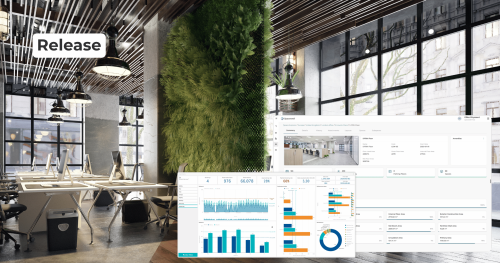
Space optimization at your workplace can be easily planned with Spacewell analytics capability. Before deciding on expensive retrofits or relocations, the Platform lets you test different layouts and scenarios virtually. That way, you can decide based on real numbers, usage patterns, expectations, and more. Always backed by data.
As an example, our customers have reduced their office footprint between 15 and 30% through data-driven space optimization, conducting full analysis of their office use to reorganize their office space before deciding on reducing their workspaces.
Myth 3: “Employees just want to work from home.”
Your employees are diverse and so are their preferences. Some would like to go into the office all the time, while others need some more convincing. The modern workforce expects choice. Choice to select the right spaces for the type of work: concentration, collaboration with colleagues, client meetings, etc.
Even with the highest willingness, a basic desk setup won’t motivate employees to commute. The office needs to deliver value for the employee experience: access to colleagues, quiet space, high-quality tech, and a pleasant atmosphere.
To truly engage teams, give them flexibility and functionality. Track what types of spaces are booked most, when peak usage occurs, and how preferences vary by department. Equipped with that insight, you will be able to modify your space and offer employees a compelling reason to return to an inviting and productive environment.
You can watch our on demand webinar with the results of the Workplace Benchmark Report to learn about how companies across Europe use their office spaces and to get inspiration to support hybrid workplace in your organization.

The Right Software to Build a Hybrid Workplace that Works
Relying on assumptions leads to wasted space and frustrated teams. By combining occupancy analytics, space simulation tools, and employee behavior insights, you can design an office strategy that reflects how your teams really work. You can do all of that with Spacewell Workplace.
Are you ready to challenge these myths and start seeing change at your workplace? Book a demo with our Workplace experts and see by yourself how you can optimize your space and improve employee experience with Spacewell’s expert analytics tool.